



Keywords
robusta coffee
commercialization
quality standards
peasant perception
Categories
How to Cite
Abstract
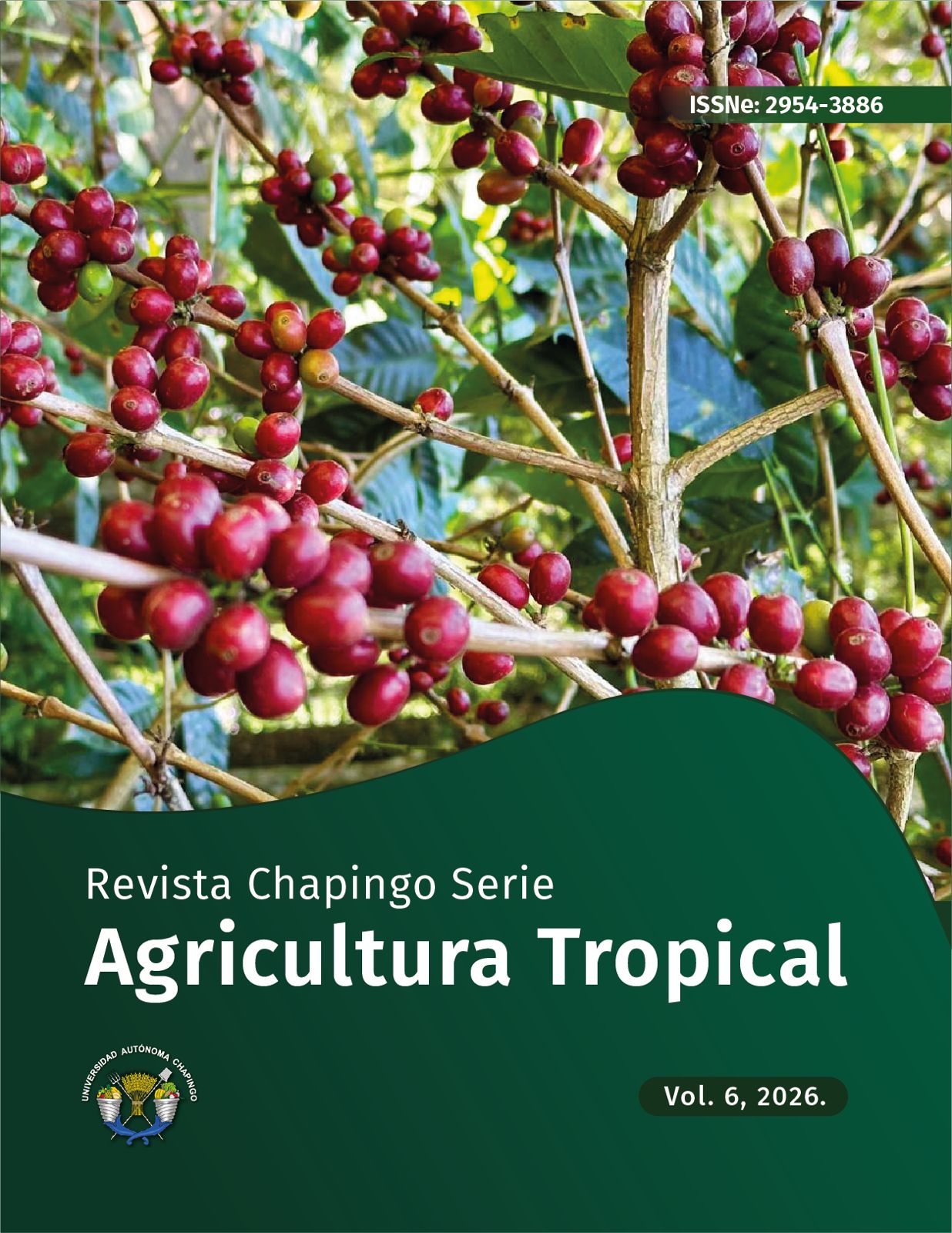
The aim of this study was to identify the implications of the quality standards to which peasant coffee production in the Huasteca Potosina is subjected. The idea of quality of agricultural products leads to power structures over farmers, which controls, measures, and qualifies the quality of coffee imposed on the market. National coffee statistics and those of coffee producing municipalities in the Huasteca Potosina were analyzed, field work was carried out, questionnaires were applied, and interviews were conducted with relevant stakeholders. It was found that the region does not stand out for its production levels and that the narrative of the low quality of the coffee beans they produce affects the commercialization of coffee produced in the region. Territories of agroecological diversity have the biophysical characteristics to produce quality coffee, however, production practices are not acceptable according to the standards established by the market
References
Aceves Navarro, Lorenzo., Rivera Hernández, Benigno., López Castañeda, Antonio., Palma López, David., González Mancilla, Rigoberto., & Juárez López, José. (2018). Áreas potenciales y vulnerabilidad del cultivo de café tipo robusta (Coffea canephora P.) al cambio climático en el estado de Tabasco, México. Nova Scientia. Vol. 10. Num. 20. Universidad La Salle Bajío A.C. DOI: 10.21640/ns.v10i20.1379
Chen, P. (1996). Quality evaluation technology of agricultural products. Deparment of Biological and Agricultural Engineering. University of California. U.S.A.
Cheng-Lung, Chang., Shou-Chuan, Lai., & Ching-Yi, Chen. (2024). Domain Adaptation for Roasted Coffee Bean Quality Inspection. International Journal of Engineering and Technology Innovation, vol. 14, no. 3. pp. 321-334
Coffee Watch, Empower y ProDesc. (2025). Explotación y Opacidad: La realidad oculta del café mexicano en las cadenas de suministro de Nestlé y Starbucks. Disponible en: https://prodesc.org.mx/wp-content/uploads/2025/02/Explotacion-opacidad-Nestle-starbuks.pdf
De Castro Perlcacho, Carlos., Gadea, Elena., Relgada, Allcla. (2021). La construcción social de la calidad. El caso del sector agroalimentario. Revista Española de Sociología. Volumen 30. Número 1. Doi: 10.22325/fes/res
De Oliveira, Luis., Franco, K., & Prado, G. (2020). TECHNICAL AND ECONOMIC VIABILITY OF COFFEE PROCESSING IN DIFFERENT SIZE CLASSIFICATIONS. International Journal of Agriculture and Environmental Research. Volume: 06, Issue: 05, p. 728.
INEGI. (2005). Marco Geoestadístico. Disponible en: https://www.inegi.org.mx/temas/mg/#descargas
INEGI. (2013). Marco Geoestadístico. Disponible en: https://www.inegi.org.mx/temas/mg/#descargas
INEGI. (2021). Diccionario de datos de climas. Instituto Nacional de Estadística y Geografía. viii, 49 p. México. [Accesado el 2 de febrero del 2025]. Disponible en: https://www.inegi.org.mx/contenidos/productos/prod_serv/contenidos/espanol/bvinegi/productos/nueva_estruc/702825199258.pdf
Jiménez-Torres, A., & Massa-Sánchez, P. (2015). Producción de café y variables climáticas: El caso de Espíndola, Ecuador. Economía, XL (40), 117-137.
Klein, N. (2000). NO LOGO. El poder de las marcas. Ediciones Pairos Ibérica. España.
Lópes Costa, Andrés., De Lollo Junqueira, Mateus., Avelar Mendes, Marcelo., & Honda Filho, Cássio. (2024). Sieve classification and bean defects of genotypes from the Big Coffee VL group: Classificação por peneira e defeitos de grãos de genótipos cafeeiros do grupo Big Coffee VL. Brazilian Journal of Animal and Environmental Research, 7(1), 379–388. https://doi.org/10.34188/bjaerv7n1-029
Autora (2024).
Mendoҫa de Carvalho, Alex., Costa de Rezende, Juliana., Teruel Rezende, Tiago., Dominguetti Ferreira, André., Machado Rezende, Ramiro., Nazareno Guimarães, Antonio., & Rodrigues Carvalho, Gladyston. (2016). Relationship between the sensory attributes and the quality of coffee in different environments. African Journal of Agricultural Research, 11(38), 3607-3614.
Moguel, Patricia & Toledo, Víctor. (1996). “El café en México, ecología, cultura indígena y sustentabilidad” en Ciencias, num. 43. Centro de Ecología, UNAM. 40-51
Monares Klyde, Adriane C., P. Ebones, Ian Rafael., & Arboleda, Edwin R. (2024). Advancements in Coffee Bean Species Classification: A Comprehensive Literature Review on Machine Learning and Image Processing Approaches. International Journal of Scientific Research and Engineering Development-– Volume 7 Issue 1.
OIC. (2018). National Quality Standards. International Coffee Organization. 122nd Session. London. United Kingdom.
Olvera, Luis. (2010). Análisis espacial y temporal de la propagación de la broca del café Hypothenemus hampei (Ferrari) en la Huasteca Potosina. [Tesis de maestría en ciencias ambientales.] San Luis Potosí, S.L.P.
Oviedo-Rodríguez, C., Jansen, K., & Vellema, S. (2025). Contested Coffees: Arabica, Robusta, and the Narrative of High-Quality Coffee in Mexico. The Journal of Development Studies, 1–18. https://doi.org/10.1080/00220388.2025.2487668
Purón-Rodríguez, D. & Tejeda-Marrero, V. (2021). Síntesis histórica del concepto de calidad desde la Revolución Neolítica a la Agricultura de Precisión. Revista Ingeniería Agrícola. Vol. 11, núm. 3, e10.
Reyes, O., Vázquez, V., Reyes, H., Nicolás, M., & Rivera, J. (2012). Potencial turístico de la región huasteca del estado de San Luis Potosí, México. Economía, Sociedad y Territorio. Vol. XII. núm.38. enero-abril. Pp 249-275. El Colegio Mexiquense, A.C. Toluca, México.
Rivera, Andrés. (1990). Variedades de café cultivadas en México. En Pérez, Miguel y Sáenz, Alfredo (Editores). El cultivo del cafeto en México. (pp. 35-40). Editorial LAFUENTE.
Shu-Min, Tan., Shih-Hsun, Hung., & Je-Chiang, Tsai. (2024). GCBICT: Green Coffee Bean Identification Command-line Tool. SoftwareX. Volumen 28. ISSN 2352-7110, https://doi.org/10.1016/j.softx.2024.101843
SIAP. (2025). Producción agrícola. Disponible en: https://www.gob.mx/agricultura/dgsiap/acciones-y-programas/produccion-agricola-33119
Vargas-Hernández, J., & Ávila-Ayala, R. (2022). Prácticas en el Beneficiado de Café en la Huasteca Potosina. Agro-Divulgación, 2(3).
Yejin, Kim., Jihye, An., & Jeehyun, Lee. (2025). The espresso protocol as a tool for sensory quality evaluation. Food Research International. Vol. 202.

This work is licensed under a Creative Commons Attribution-NonCommercial 4.0 International License.
Copyright (c) 2026 Revista Chapingo Serie Agricultura Tropical